

Can Tooth Pain Cause Headaches? A Guide to the Connection
Many people wonder, “Can tooth pain cause headaches?” The answer is yes. Dental issues often trigger head pain because the nerves in your face, mouth, and head are closely linked. Whether you’re experiencing a dull ache, a sharp tooth pain headache, or both headache and tooth pain at the same time, these symptoms often signal deeper oral health concerns.
In many cases, addressing the dental problem also relieves the headache. This guide explains how dental issues cause head pain, the most common triggers, and when you should seek help from an Emergency Dentist in Soho.
How Tooth Pain and Headaches Are Connected
To understand why tooth pain can cause headaches, it helps to look at the trigeminal nerve, one of the largest nerves in the head. This nerve controls feeling in the teeth, jaw, cheeks, and forehead. When a dental problem irritates the trigeminal nerve or nearby blood vessels, that irritation can spread upward and create a headache.
This explains why even minor dental issues can lead to significant discomfort if left untreated. A simple cavity or gum disease can quickly turn into a toothpain headache if the nerve becomes inflamed.
Common Dental Causes of Headaches

Several dental problems are known to cause both tooth pain and headaches:
1. Tooth Infections or Abscesses
A deep cavity or infected tooth leads to bacterial buildup and inflammation. These tooth infections often create severe pain that spreads to the head, making you feel like you’re dealing with both problems at once.
2. Teeth Grinding (Bruxism)
Grinding your teeth puts strain on jaw muscles and the temporomandibular joint. This tension commonly leads to headaches, especially in the morning.
3. Temporomandibular Joint Disorder
TMJ disorder affects how your jaw moves and can cause facial discomfort, popping sounds, and headaches. The temporomandibular joint sits close to the trigeminal nerve, which explains why TMJ problems often result in head pain.
4. Impacted Wisdom Teeth
When wisdom teeth push against nerves or surrounding teeth, the pressure can cause swelling and headaches that feel similar to sinus pain.
5. Sinus Infections
Sinus cavities sit close to the roots of your upper teeth. When the sinuses are infected, pressure can mimic tooth pain and cause headaches. In some cases, dental issues can even worsen sinus inflammation.
6. Cracked Tooth Syndrome
Small cracks in a tooth can irritate the inner nerves. Although these cracks might be hard to see, the discomfort can radiate throughout the face and head, leading to recurring headaches.
How Dentists Diagnose Headache and Tooth Pain
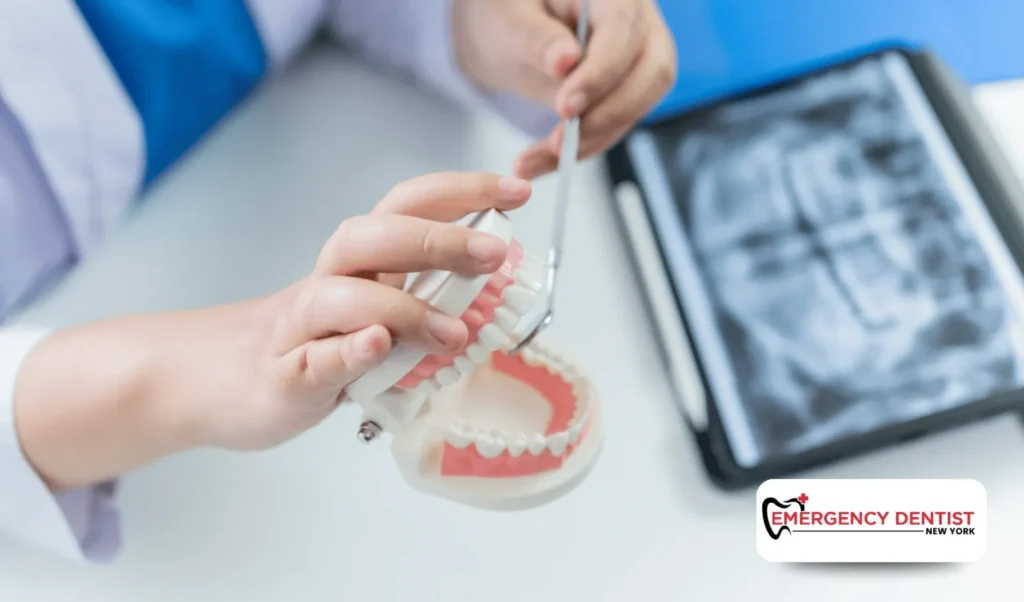
A dental professional may use several methods to determine whether your headache is related to a dental problem:
- A visual exam to check for decay, cracks, and gum disease
- Digital X-rays to evaluate tooth roots, infections, and sinus issues
- TMJ assessment to check jaw alignment and muscle tension
- Review of headache patterns, triggers, and frequency
- Discussion of daily dental care habits and possible causes
This evaluation helps identify the source of the discomfort and guides the proper treatment plan.
When to Call an Emergency Dentist in Soho
Some dental problems should not wait for a routine appointment:
- Tooth abscesses: These may require drainage or a root canal. If left untreated, an infection can spread or, in rare cases, affect blood vessels in the brain.
- Severe TMJ or bruxism: You may need a custom night guard to prevent further damage and reduce headaches.
- Impacted wisdom teeth: These often require extraction if they cause pain, swelling, or sinus problems.
If you have fever, swelling, intense headache and tooth pain together, or difficulty chewing, seek emergency dental care immediately.
How to Prevent Tooth Pain and Headaches
Protecting your oral health is one of the most effective ways to avoid tooth-related headaches. Here are some tips:
- Brush and floss daily using fluoride toothpaste
- Avoid sugary foods that contribute to tooth decay
- Use a custom night guard if you grind your teeth
- Schedule regular dental visits for checkups and cleanings
- Limit abrasive whitening products to protect enamel
- Try home remedies such as applying a cold compress to reduce inflammation
- Rinse your mouth with warm saltwater (a teaspoon of salt in a cup of water) to soothe irritation
Consistent dental care helps prevent gum disease, infections, and tooth decay, all of which can cause headaches if ignored.
Special Focus: Tooth Pain While Pregnant
Pregnant women are more likely to experience tooth pain while pregnant because of hormonal changes. Increased risk of gum disease and morning sickness, which weakens enamel, can lead to both toothaches and headaches. Maintaining good dental care is essential during pregnancy, and many dental procedures are safe in the second trimester. Ignoring dental issues while pregnant can lead to complications.
Always consult both your dentist and healthcare provider for safe care recommendations.
Act Before Symptoms Get Worse
So, can tooth pain cause headaches? Yes. Dental problems and headaches are closely linked through shared nerve pathways, especially the trigeminal nerve. Addressing dental issues early can prevent serious complications and provide lasting relief.
If you’re experiencing persistent headache and tooth pain, don’t wait. Contact an Emergency Dentist in Soho to protect your dental health and overall well-being.