

How Much Are Dental X-Rays? Costs, Types & Safe Use Guide
Dental care is more than brushing, flossing, and going to regular dental checkups. Many dental problems hide below the surface, where they cannot be seen during a normal visual exam. That’s why dental imaging is a crucial part of preventive dental care.
Dental x-rays allow dentists to see inside the teeth, jawbone, and surrounding tissues so they can detect issues early and plan appropriate dental procedures. Whether you’re having a routine dental exam or seeking urgent treatment, x-rays help protect your smile and overall oral health.
What Are Dental X-Rays
Dental x-rays are specialized images that show the internal parts of the mouth. While a dentist can only see the outer surfaces of the teeth during a regular dental visit, x-rays reveal what’s happening underneath. They can show cavities between teeth, infections at the roots, impacted teeth, cysts, bone changes, and other hidden dental problems. Without this type of x ray, early signs of disease could go unnoticed until they turn into serious issues.
How Much Are Dental X-Rays
Patients often search how much are dental xrays, how much does a dental xray cost, or how much is a dental xray. The answer depends on several factors. The dental x rays cost varies based on:
- The type of x ray taken, such as bitewing x rays, panoramic x rays, or 3D imaging
- The technology used by the dental practices
- Whether the imaging is for a regular dental visit or urgent care
- Your insurance plan
- The dental offices and the level of expertise required
A full set of intraoral images may not cost the same as a panoramic scan or advanced 3D imaging often used for orthodontic treatment or complex evaluations. While it’s natural to wonder how much dental xrays cost, it’s just as important to understand their value. Dental x-rays help prevent major dental problems by detecting issues early, allowing dentists to create treatment plans that protect long-term oral health and may reduce the overall cost of dental care.
How Often Dental X-Rays Are Needed
Another common question is how often dental xrays are necessary. The answer varies depending on:
- Age
- Overall oral health
- Cavity risk
- Past dental problems
- Whether ongoing dental procedures are needed
Children typically need x-rays more often because their teeth and jaws are developing quickly. Adults with a healthy mouth might not need them as frequently, while those prone to decay or gum disease may require imaging more regularly. Dentists customize x-ray schedules so each patient receives the safest and most effective care possible.
Types of Dental X-Rays
There are several types of dental x-rays, each designed for a different purpose. Knowing the difference helps you understand why your dentist may select one over another.
Intraoral X-Rays
These are taken inside the mouth and provide highly detailed images.
Bitewing x rays
These show the crowns of the upper and lower teeth and are excellent for finding cavities between teeth and checking bone levels affected by gum disease.
Periapical x-rays
These images show the entire tooth, from crown to root, and are useful for diagnosing abscesses, root infections, or bone abnormalities.
Occlusal x-rays
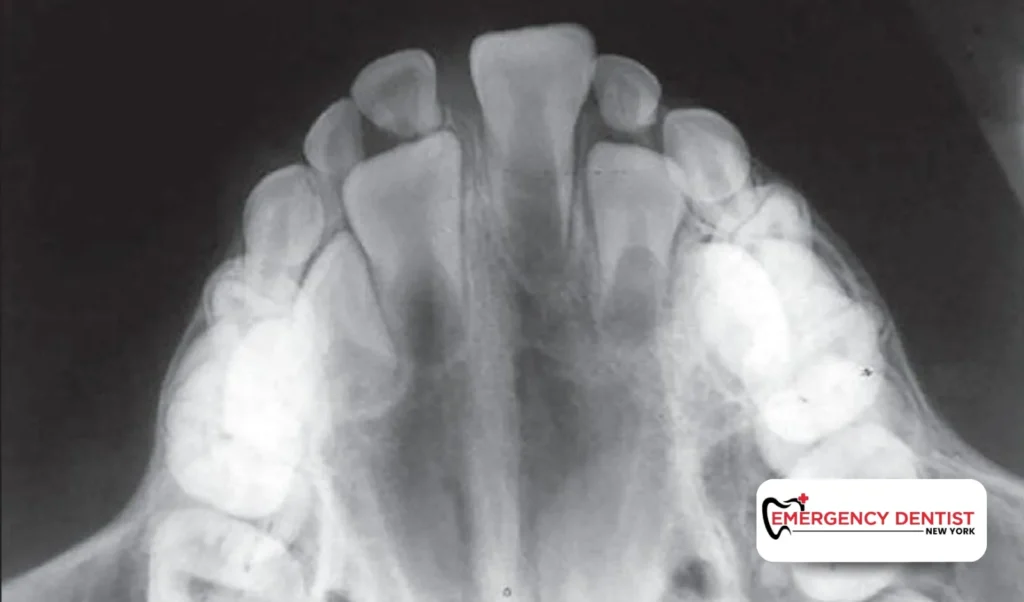
These larger images show full sections of the upper or lower jaw and are often used in children or special evaluations.
Extraoral X-Rays
These are taken outside the mouth and show the bigger structures of the face and jaw.
Panoramic x rays
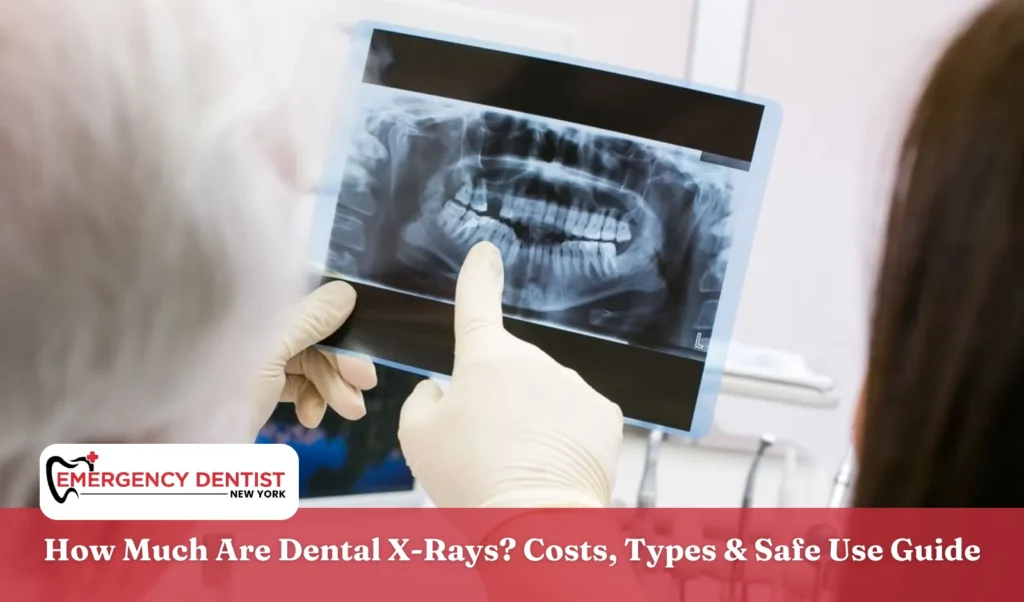
These wide-view images capture the entire mouth in one picture and are often used before orthodontic treatment, wisdom tooth evaluations, or diagnosing hidden dental problems.
Cephalometric x-rays
These images show the relationship between the teeth, jaw, and facial profile and are commonly used in orthodontic planning.
3D imaging (CBCT scans)
This advanced technology produces detailed three-dimensional views of teeth and bone. It’s especially helpful for dental implants, root evaluations, and complex surgical planning.
Why the Different X-Ray Types Matter
Dentists choose the appropriate x-ray based on the dental procedure or suspected issue. Bitewing x-rays are ideal for checking early cavities, while panoramic x rays provide a full view for orthodontic treatment or wisdom tooth concerns. 3D imaging offers precise details for implants or surgical planning. Using the correct imaging method ensures that treatment is more accurate, efficient, and customized for each patient.
Are Dental X-Rays Safe
Some patients worry about radiation exposure, but today’s dental imaging is extremely safe. Modern digital equipment uses very low radiation levels. Dentists also use protective items like a lead apron and thyroid collar to further reduce exposure. The minimal radiation involved is significantly outweighed by the benefits of detecting dental problems early. Digital x-rays are quick, comfortable, and much safer than older film-based techniques.
How Dental X-Rays Support Treatment Planning
Dental x-rays are essential for accurate diagnosis and treatment planning. They help dentists:
- Identify tooth decay between teeth
- Detect infections that may require root canal therapy
- Check bone height for gum disease
- Prepare for orthodontic treatment
- Review wisdom tooth positioning
- Assess bone density before implants
Without imaging, many dental concerns would remain hidden. Dental x-rays ensure treatment plans are based on complete and accurate information.
Why Dentists Can’t Rely on the Naked Eye Alone
Even highly trained dentists can’t see everything just by examining the mouth visually. Cavities that form between teeth, root infections, impacted teeth, and early bone loss are invisible without x-rays. That’s why dental exams typically include imaging, it gives a full picture of your oral health.

Emergency Dentist in Quogue
There are situations where dental x-rays cannot wait. If a tooth breaks in an accident, swelling appears suddenly, or severe pain develops without warning, an Emergency Dentist in Quogue may need immediate imaging to diagnose the problem. Quick access to bitewing, panoramic, or periapical x-rays helps the dentist identify the issue and provide same-day treatment. In urgent cases, fast imaging can make the difference between saving a tooth or losing it.
Conclusion
Dental x-rays are a vital part of modern dental care. Whether you need routine imaging, orthodontic planning, or emergency diagnosis, x-rays help dentists find issues early and create effective treatment plans. While many people wonder how much are dental xrays or compare the cost of dental imaging across dental offices, the true value lies in the prevention and precision they offer. By using tools like bitewing x rays, panoramic x rays, and 3D imaging, dental practices help protect your oral health and support long-term wellness.